Best Shears for Stylists with Hand Pain: Expert Ergonomic Guide
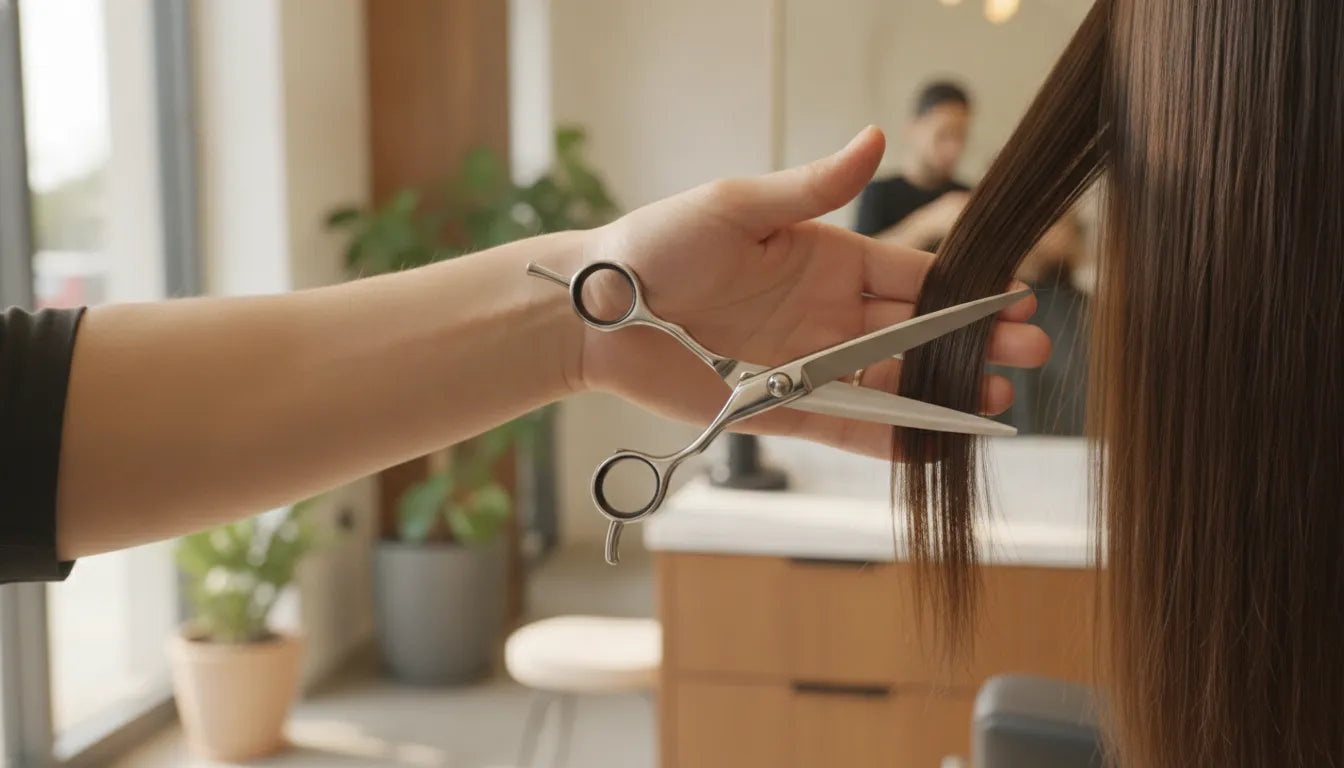
When a familiar haircut starts leaving your thumb, wrist, or forearm aching, the problem may be more than fatigue. The handle shape, thumb movement, closing force, and fit of your shears all influence how much strain accumulates through a full day behind the chair. Ergonomic design is one practical part of protecting hands and extending careers, and our guide to Ergonomic Swivel Shears explores the broader approach.
Call 888-544-7254 to speak with a Shark Fin specialist about ergonomic shear options for arthritic or sore hands.
The best shears for stylists with hand pain combine an ergonomic offset or crane-style handle. A swivel thumb that supports natural movement, a properly fitted grip, and blades that cut efficiently without excessive closing force. These features are designed to help reduce strain, not to treat arthritis or replace medical guidance.
Choosing the right combination starts with understanding which design details support a more neutral hand position and a comfortable, controlled cut. Here is what to evaluate before investing in your next professional shears.
What Makes the Best Ergonomic Shears for Stylists with Hand Pain
When hand pain or arthritis changes how you cut, the right shear should support a neutral working position and reduce the effort required for each section. Look for ergonomic features that work together rather than relying on one design detail.
Start with the handle shape
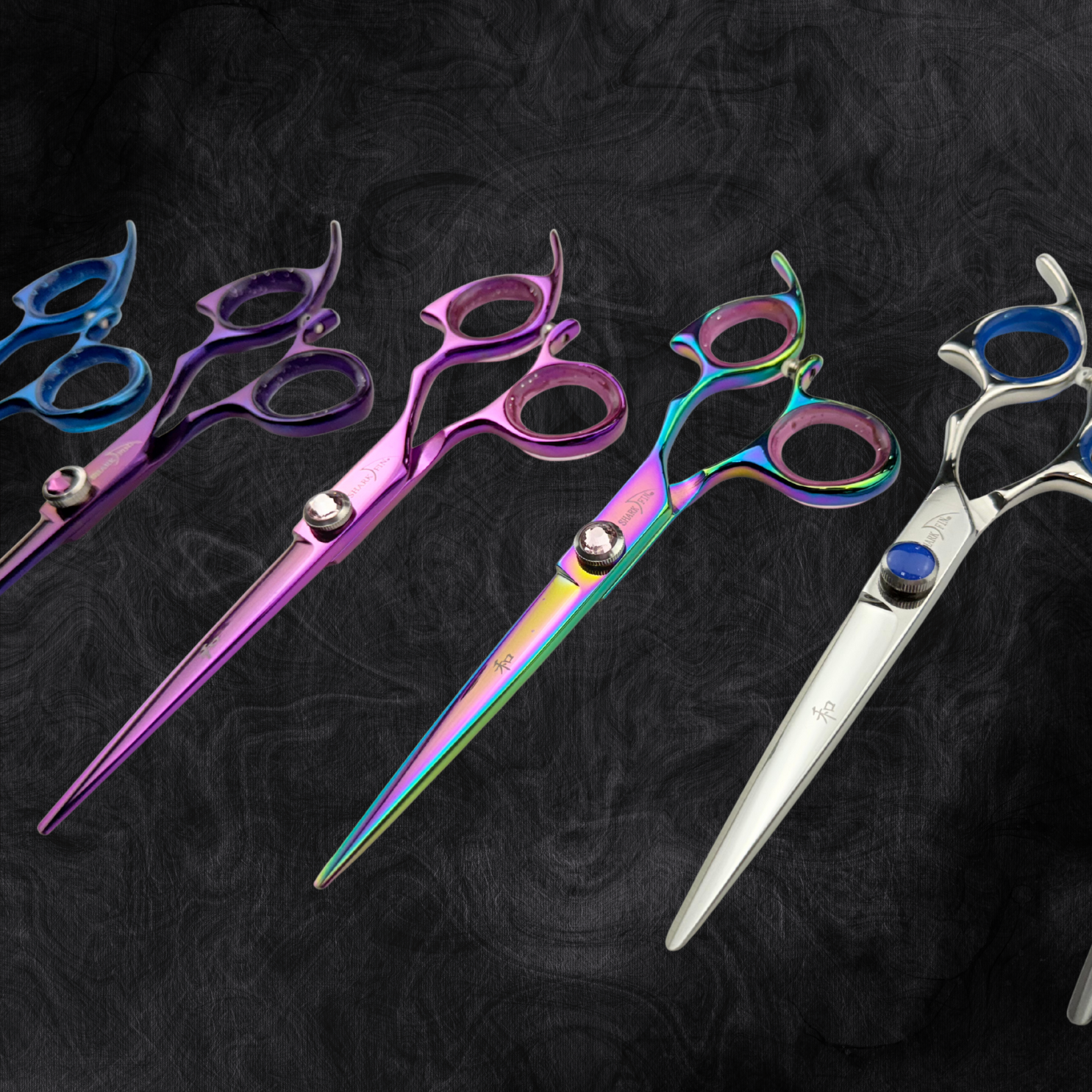
- Offset or crane handles: These designs place the thumb and fingers in a more natural relationship, helping reduce strain across the fingers, hand, and forearm during repetitive cutting. The Mayo Clinic recommends offset handles in tools because they help the hand and wrist stay in a more neutral position, which can take stress off the joints. Read the Mayo Clinic guidance on joint protection.
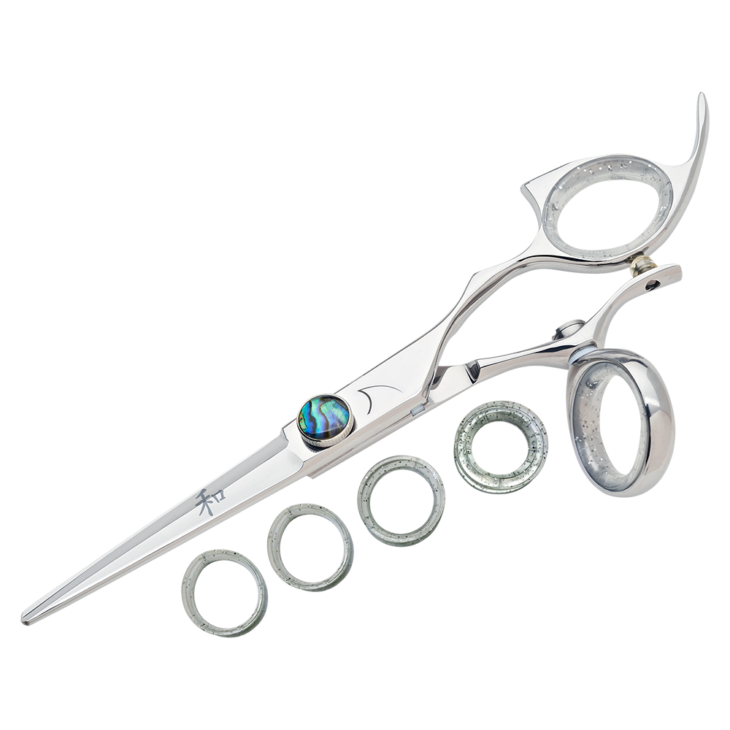
- Swivel thumb rings: A rotating thumb ring allows the thumb to move with the hand instead of forcing the wrist into one fixed angle. This can be especially helpful when ordinary thumb rings create pressure or make elevation feel restricted.
- Cushioned, properly sized grips: Larger, cushioned contact points can reduce pressure points and the grip strength needed to hold a tool. That principle is also reflected in Mayo Clinic guidance on choosing tools with larger, cushioned grips.
Reduce the effort of every cut
Weight matters over a full day. A lighter professional shear can reduce cumulative fatigue, particularly when you are cutting continuously or working above shoulder level. Adjustable tension matters just as much. If the tension is too tight, the blades demand unnecessary force. If it is too loose, the shear may fold or push hair, encouraging you to squeeze harder. Set tension so the blades close smoothly while maintaining clean control.
Spring-loaded action is another feature worth considering. Spring-loaded scissors open automatically, which can lessen the effort required to reopen the blades and may help reduce strain on arthritic hand joints. Research on scissor comfort likewise associates lower closing load with less physical force during cutting.
Fit the shear to your hand
A shear can be technically ergonomic and still feel wrong if the finger openings do not match your hand. Shear Fit lets you customize the finger fit with four to six sizing options, helping keep the tool stable without excessive gripping. A correctly fitted handle should let you guide the shear with relaxed fingers, not clamp down to maintain control.
For a deeper look at how ergonomic tools support longevity, read Ergonomic Shears and Stylist Health.
What makes shears ergonomic for arthritic hands?
Ergonomic shears for arthritic hands typically combine an offset or crane handle, a swivel thumb ring. Low-effort blade action, adjustable tension, comfortable grip surfaces, and a finger fit matched to the stylist. These features are designed to support a neutral wrist position and help reduce strain. They do not treat arthritis, so persistent pain should be discussed with a qualified healthcare professional.
Offset vs Straight Handle: Which Is Better for Injured Hands?
Handle geometry changes how your wrist, fingers, elbow, and shoulder share the work of a haircut. A straight handle may feel familiar, but it can encourage a tighter grip and a more flexed wrist during repetitive cutting. Offset and crane designs move the thumb and finger positions so you can work with less joint compression and less effort. For stylists managing arthritis, carpal tunnel symptoms, or repetitive strain injury (RSI), that difference can matter across a full day behind the chair.
| Handle design | Hand and body position | Best fit for stylists who need |
|---|---|---|
| Straight handle | Can create a cramped hand position and encourage wrist strain during repetitive cutting. | A familiar traditional feel, provided it does not increase discomfort or force a tight grip. |
| Offset handle | Places the thumb and finger rings at different angles, supporting a more neutral wrist and reducing finger strain. | Early hand pain, general fatigue, or stylists who want a more natural cutting position. |
| Crane handle | Drops the elbow and helps reduce shoulder elevation while supporting a relaxed grip. | Arthritis, carpal tunnel concerns, RSI, or shoulder tension linked to long cutting sessions. |
Why offset handles help
Offset handles are not a treatment for an injury, but their position can help you avoid working at an extreme wrist angle. Mayo Clinic recommends tools that keep the hand and wrist more neutral because offset designs can take stress off the joints. In shears, that principle translates into less strain across the fingers, hand, and forearm during repetitive cutting. It is one reason an offset design is often a practical starting point when hand pain is new or increasing.
When a crane handle makes more sense
A crane handle takes the ergonomic idea further by lowering the elbow and reducing the tendency to lift the shoulder. Shark Fin's patented crane grip design is engineered to reduce strain by 40%, helping stylists maintain control without relying on excessive shoulder or hand tension. That makes crane or offset shears a stronger choice than a straight handle for stylists who notice arthritis-related stiffness, carpal tunnel discomfort, or RSI symptoms while working.
Choose the design that lets you cut with a relaxed hand, neutral wrist, and lowered shoulder. If pain persists or worsens, consult a qualified healthcare professional and review your cutting technique, shear fit, and work setup.
Swivel Thumb Ring Shears: The Most Significant Pain-Reduction Feature
For stylists managing hand pain or arthritis, the thumb ring can matter as much as the blade. A swivel thumb mechanism rotates with the thumb instead of forcing the thumb, wrist, and forearm to stay fixed while the blades open and close. That freedom helps the hand follow a more natural path through the cut, reducing wrist deviation and pressure around the carpal tunnel area. It does not treat an injury, but it can help reduce strain during repetitive work.
Swivel shears are frequently recommended for repetitive strain and carpal tunnel concerns because they address the movement that standard fixed-thumb shears require. You can read more about ergonomic swivel shears for hand pain and how the design supports control during a haircut.
Why the closing load matters
Thumb mobility is only part of the ergonomic equation. The amount of force needed to close the blades also affects comfort. Research on scissor ergonomics found that a low mean closing load can increase comfort by reducing the physical force required during the cutting action. The study on scissor closing load also notes that reducing changes in load near the blade tip can improve comfort. Proper tension adjustment, sharp blades, and a well-balanced shear all help you avoid squeezing harder than necessary.
Single-swivel versus double-swivel shears
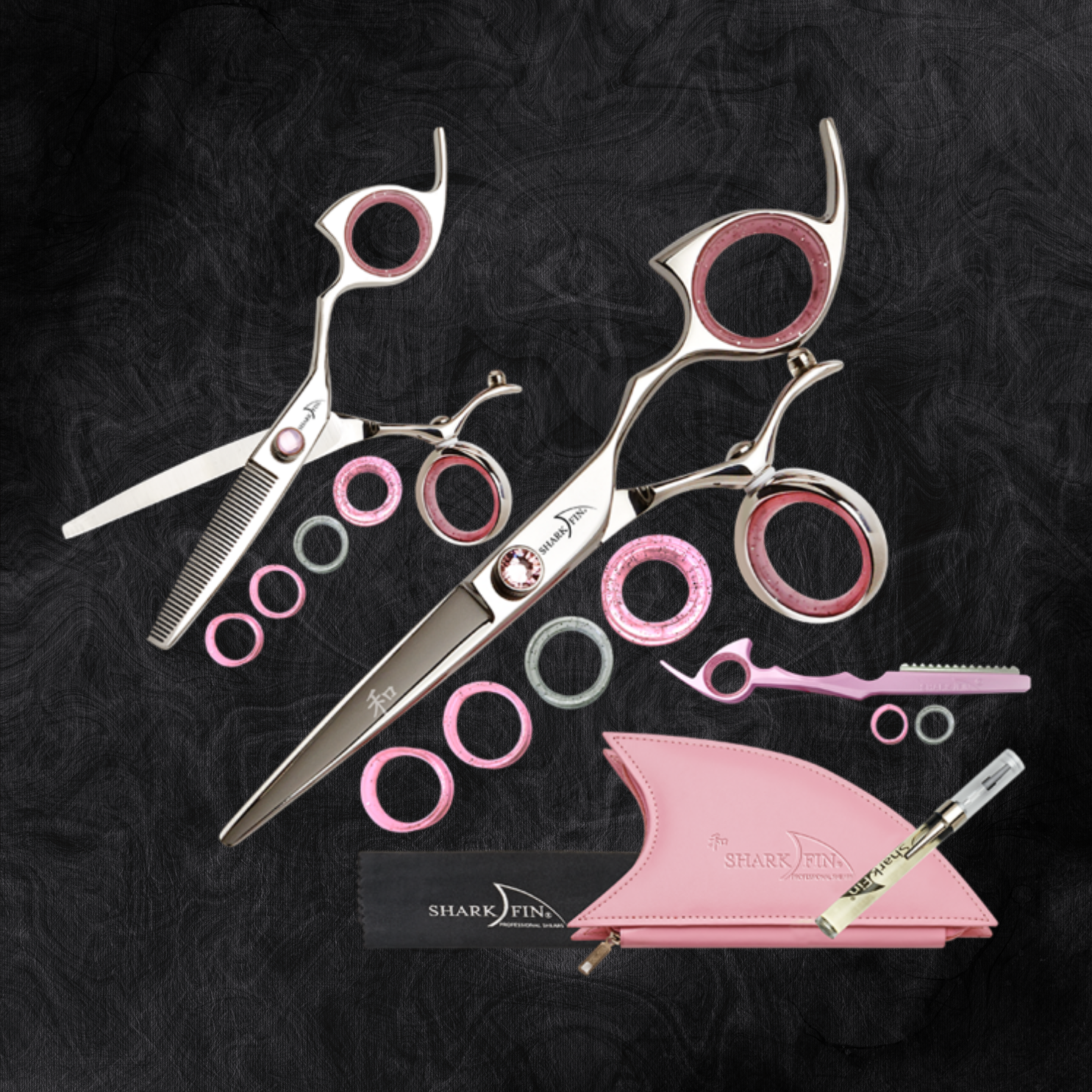
A single-swivel shear uses one rotating thumb ring. This gives the thumb room to move naturally while the finger ring remains stable, making it a practical step up from a fixed handle. A double-swivel design, such as the Double Shark, allows both the thumb and finger rings to rotate. That additional movement can be especially useful for stylists who change cutting angles frequently or feel discomfort when the entire hand must remain locked into one position.
The right choice depends on your cutting technique, hand size, and where you feel pressure. A single swivel may provide the mobility you need with a familiar feel. A double swivel offers a more fully adaptive handle for stylists seeking maximum freedom of movement. In either case, the goal is not to force your hand to adapt to the shear. It is to choose a shear that works with your natural motion, helping protect hands and extend careers.
How does a swivel thumb shear reduce hand pain?
A swivel thumb shear lets the thumb rotate naturally as you cut. Which can reduce wrist deviation, thumb pressure, and the forceful gripping associated with a fixed thumb ring. Combined with low closing load and correct tension, this design may help reduce strain during repetitive cutting.
Weight and Blade Steel: How These Factors Affect Arthritic Hands
When your hands are already working through stiffness or arthritis, every haircut adds to the day's cumulative load. Shear weight matters because you lift, stabilize, open, and close the tool repeatedly. A lighter pair can help reduce that ongoing strain, especially during a full schedule. The Monarch ATS-314 is designed to be 30% lighter than conventional shears. Making it an option for stylists who want a substantial reduction in tool weight without giving up professional performance.
Blade steel matters for a different reason: edge performance affects how much force you need to apply. A sharper, well-maintained edge can move through the hair with less resistance, while a dull or poorly tensioned shear encourages extra squeezing. That relationship is consistent with research on shear comfort, which found that a lower closing load requires less physical force during cutting (read the study on scissor closing load). Convex edges can also glide through the hair with less resistance when properly sharpened and maintained.
How the main steel options compare
- 440-C, 57-59 HRC: Used in the Professional line, this steel offers a practical balance of durability, edge performance, and value for everyday professional cutting.
- VG-10, 60-61 HRC: Used in the Double Shark, this harder steel supports a sharper, longer-lasting edge that can help reduce the force required for clean cutting.
- ATS-314, 62-63 HRC: Used in the Monarch, this premium steel combines high hardness with the line's lighter construction for stylists prioritizing both edge performance and reduced weight.
Hardness is not the only buying criterion. The best choice depends on your cutting technique, maintenance habits, hand size, and how long you work each day. A lighter shear may feel better over eight hours, while a sharp convex edge may make repeated closing motions feel easier. Correct tension and regular professional sharpening are equally important because an edge that drags through the hair can increase fatigue regardless of its steel grade.
Does shear weight really matter for hand pain?
Yes, it can. Weight alone does not determine comfort, but a lighter shear reduces the load you repeatedly support throughout a working day. Pair that lower weight with an ergonomic handle, a properly fitted finger insert, a sharp convex edge, and correctly adjusted tension. Together, these features help reduce strain and support more comfortable cutting without making a medical promise about arthritis symptoms.
Our Top Ergonomic Shear Recommendations by Injury Type
The right shear depends on where fatigue shows up first. Use this table as a starting point, then match the handle, swivel action, fit, and weight to the way you cut every day. Shark Fin's ergonomic swivel shears for hand pain are designed to support a more natural cutting position without asking you to sacrifice precision.
| Injury Type | Recommended Shear | Key Features | Price |
|---|---|---|---|
| General hand pain | Professional Plus | Offset handle, swivel thumb, convex edges, and an adjustable fit that supports a neutral hand position | $449+ |
| Arthritis or carpal tunnel | Double Shark | Double swivel action, VG-10 steel, convex edges, and a design that lets the thumb rotate with the cut | $699+ |
| Severe RSI or chronic pain | Monarch | Ball-bearing pivot, ATS-314 steel, swivel movement, and a lighter build that is 30% lighter than conventional shears | $849+ |
| Shoulder or neck tension | Any crane-handle model with Shear Fit | Crane handle geometry, custom finger guards, and 4-6 finger-fitting options for a more comfortable working position | Varies by model |
For everyday hand fatigue
Start with the Professional Plus if your hand pain builds gradually through a full day behind the chair. Its offset handle helps keep the hand and wrist closer to neutral, while the swivel thumb and convex edges support controlled cutting with less forced positioning. The patented Shark Fin handle design is scientifically reported to reduce strain by 40%. Choose the correct finger fit, and keep tension properly adjusted so the blades do not demand unnecessary grip force.
For arthritis, carpal tunnel, or higher irritation
The Double Shark is the stronger fit when thumb pressure and wrist deviation are the main problems. Its double-swivel action allows more natural thumb movement, and VG-10 steel provides a durable cutting edge. If you need a closer fit around the handle, review the custom fit finger inserts available through Shear Fit.
For chronic strain and shoulder tension
When weight becomes part of the problem, the Monarch is worth considering. Its ATS-314 steel construction and ball-bearing pivot pair a lighter feel with smooth movement. For shoulder or neck tension, a crane handle can help you avoid elevating the shoulder as you work. Shear Fit customization matters here: a handle that fits your fingers securely can reduce compensating movements. These tools are not medical treatment, but the right design can help reduce strain and support a longer, more comfortable career.
Every hand is different, and the right ergonomic shear depends on your technique, hand size, and the type of discomfort you experience. Browse the Shark Fin ergonomic shear collection to explore offset, crane, and swivel-thumb options designed to work naturally with your hand.
Frequently Asked Questions About Ergonomic Shears for Hand Pain
What kind of scissors are best for arthritis?
Look for shears that open easily, use an offset or crane-style handle, and fit your fingers without pressure points. Spring-loaded designs can reduce the effort needed to reopen the blades, while a neutral wrist position helps limit strain during repetitive cutting. Mayo Clinic recommends tools that support a neutral hand and wrist position and reduce stress on arthritic joints.
How do you choose ergonomic hair shears?
Start with the handle, thumb movement, weight, and fit. An offset handle can keep your wrist more neutral, and a swivel thumb ring allows your thumb to move more naturally. Choose a length and weight you can control comfortably throughout a full day, then confirm that the finger guards and tension adjustment suit your hand.
Are swivel thumb shears better for stylists?
They can be a strong option for stylists who experience wrist or thumb tension. A rotating thumb ring follows more of your natural hand movement instead of forcing the thumb into one fixed position. The best result depends on your technique, hand size, and whether the shear feels balanced and smooth through the entire cut.
Can dull shears make hand pain worse?
They can increase the force required to cut, which may contribute to fatigue during a busy schedule. Keep blades properly serviced and replace or sharpen them when cutting feels rough, catches hair, or requires extra pressure. A comfortable ergonomic design works best when the blades and pivot are maintained properly.
Ready to Choose Shears That Feel Better in Hand?
The right ergonomic design can help reduce strain and support more comfortable cutting throughout a busy day behind the chair. If you are comparing handle styles, thumb movement, or fit, a specialist can help you narrow the options for your technique and needs. Call 888-544-7254 to discuss your options with the Shark Fin team.