How to Choose Professional Hair Cutting Scissors: A Pro Guide
Does your hand cramp up during a detailed haircut? Do you feel that familiar ache in your wrist or shoulder at the end of a long day? That discomfort isn't just "part of the job"—it's a sign that your tools are working against you. The repetitive motions of cutting hair can take a serious toll on your body, but the right ergonomic shears can make a world of difference. They are designed to reduce strain by allowing you to work in a more natural, relaxed position. If you're tired of the pain, it's time to learn how to choose professional hair cutting scissors that prioritize your health and comfort, allowing you to focus on your clients, not your aching joints.
Key Takeaways
- Match the tool to the technique: Your toolkit needs variety because different shears have specific jobs. Use shorter shears for precision, longer shears for efficient bulk removal, and texturizers for creating movement; this leads to better results with less effort.
- Invest in ergonomics for career longevity: The design of your shears directly impacts your physical health. Choosing ergonomic handles (like offset or crane designs) and well-balanced blades is a critical investment to prevent hand fatigue, strain, and long-term injury.
- Commit to daily shear care: High-quality shears require consistent maintenance to perform well. A simple daily routine of cleaning, oiling, and checking tension, plus periodic professional sharpening, is essential for preserving blade performance and extending the life of your tool.
Breaking Down the Types of Professional Shears
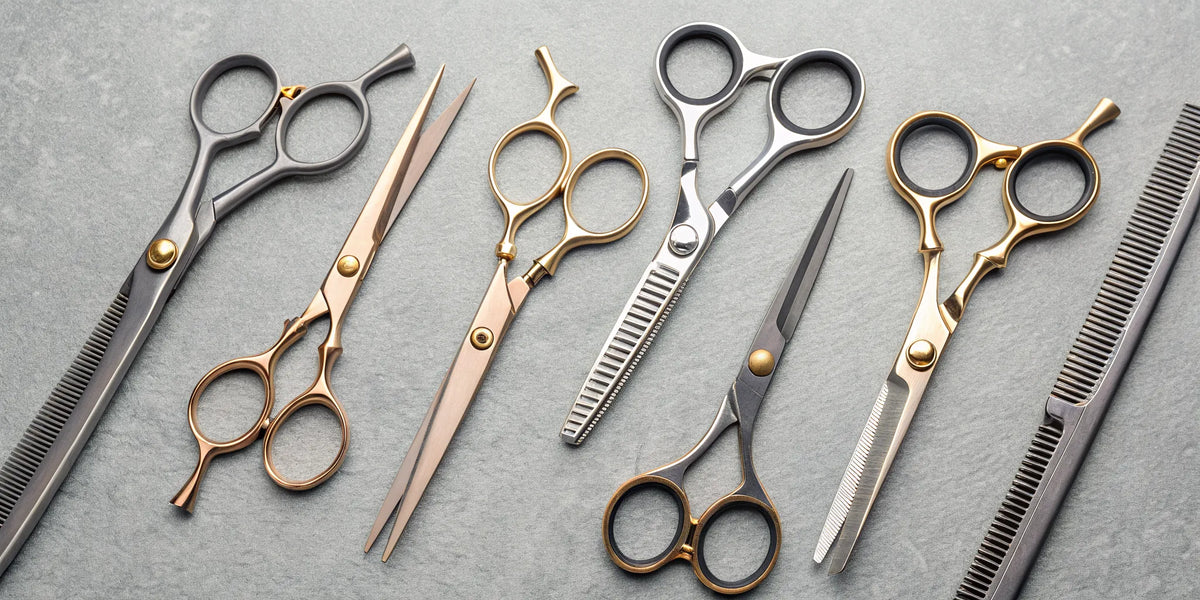
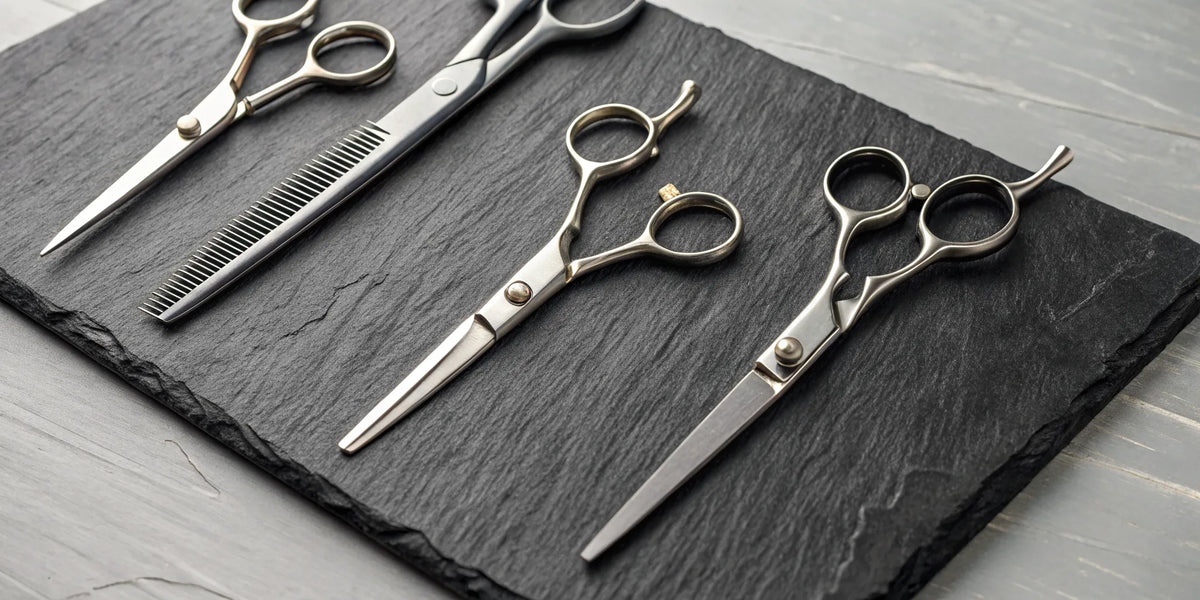
Walking into the world of professional shears can feel like a lot, with so many types, lengths, and styles to choose from. But once you understand the specific job each tool is designed for, building your perfect kit becomes much easier. Your shears are the most important tools you own, and knowing the core three types is the first step toward mastering your craft and protecting your body for a long, successful career behind the chair. Each one has a distinct purpose, from creating a strong foundation to adding the final, personalized details.
Straight Shears
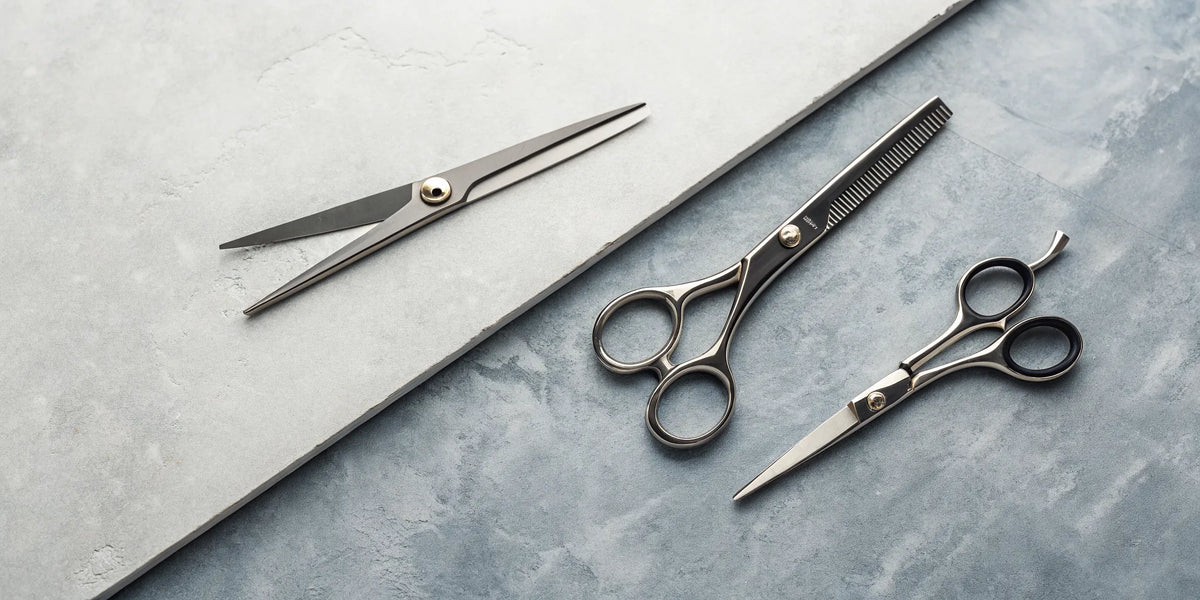
Think of straight shears as the workhorse of your toolkit. These are your go-to for creating clean lines, blunt bobs, and the foundational structure of almost any haircut. Because they do the heavy lifting, the quality of the blade is everything. A sharp, durable blade made from high-quality steel will give you the crispest lines and make your job feel effortless. When you’re looking at straight shears, like our Professional Series, pay attention to the length. Shorter blades offer more precision for detailed work, while longer blades are great for techniques like cutting over a comb.
Thinning Shears
Thinning shears, sometimes called blending shears, are your secret weapon for removing bulk without sacrificing length. One blade is straight, while the other has teeth that cut only a portion of the hair, creating a softer, more lived-in look. They are perfect for softening thick hair, blending layers, and reducing weight to make hair more manageable for your client. A common mistake is using dull thinning shears, which can snag or pull the hair instead of cutting it cleanly. Always make sure your thinning shears are sharp to avoid damaging the hair cuticle and ensure a seamless blend every time.
Texturizing Shears
While they look similar to thinning shears, texturizing shears are designed for creativity and detail work. They typically have wider teeth with more space between them, which removes a larger section of hair to create visible texture and movement. Use them to add piecey-ness to short styles, create soft volume, or break up solid lines for a more modern finish. Because they make such a noticeable impact on the haircut, it’s important to understand how to use them correctly. Learning different texturizing techniques will allow you to control the outcome and add your unique artistic signature to every cut.
Does Shear Size Really Matter?
When you’re building your toolkit, it’s easy to wonder if shear size is just a matter of preference or if it genuinely impacts your work. The short answer is: yes, it absolutely matters. Think of it this way: you wouldn’t use a tiny detail brush to paint a large wall. The same principle applies to cutting hair. The right shear size is all about matching the tool to the technique you’re performing.
A longer blade allows you to cut clean, straight lines and remove bulk efficiently, while a shorter blade gives you the control needed for detailed, intricate work. It’s also about your comfort. Using a shear that’s too big or too small for the job can lead to hand fatigue and strain. While a common starting point is to measure a shear against your hand, your cutting style is the most important factor. You can see how different techniques call for different tools on our YouTube channel, where we share free educational content for stylists.
For Precision Cutting (4.5–5.5 Inches)
For those moments when every millimeter counts, a smaller shear is your best friend. Shears in the 4.5 to 5.5-inch range are designed for exact and detailed cuts. Because the blade is shorter, your hand is closer to the cutting point, which gives you maximum control for intricate work. This makes them the perfect choice for detailing a fringe, cleaning up lines around the ears, or doing precise point cutting to create texture. If you specialize in short, structured haircuts or styles that require a lot of personalization, a smaller shear will feel like a natural extension of your hand, allowing you to execute your vision with confidence and accuracy.
For Over-Comb and Bulk Cutting (6+ Inches)
When you need to remove weight or establish a strong perimeter, a longer shear is the way to go. Shears that are 6 inches or longer are built for efficiency. The extended blade length allows you to cut through larger sections of hair in a single, smooth motion, which is ideal for techniques like scissor-over-comb, deep point cutting, and creating crisp, blunt lines for a bob. Barbers and stylists who work with thick hair often rely on longer shears to get the job done quickly and cleanly. Instead of making multiple small cuts, you can create a seamless line with less effort, saving you time behind the chair and giving your client a flawless result.
What Defines a Quality Blade?
Think of your shears as an extension of your hand. The blade is the most critical part of that extension, doing the work that brings your creative vision to life. The quality of the blade doesn't just determine how cleanly it cuts hair; it affects how the shears feel in your hand, how long they last, and ultimately, the quality of your work. When you’re looking at new shears, the blade’s material, edge, and durability are the three key factors that separate a professional tool from a basic one. Understanding these elements will help you choose a pair that feels like it was made just for you.
Stainless Steel vs. High-Carbon Steel
The type of steel used in your shears is the foundation of their performance. You’ll often hear about Japanese or German steel, and for good reason. These are typically high-carbon stainless steel alloys, which are harder and more durable than standard stainless steel. This hardness allows them to be honed to a much sharper edge.
Why does that matter behind the chair? A sharper, harder blade means you get a smoother, more precise cut every single time. It glides through the hair without pushing or pulling. Shears made with premium materials like Japanese 440-C steel stay sharp longer, meaning you won't have to send them out for sharpening as often. Investing in a tool with quality steel is one of the best things you can do for your technique and your hands.
Convex vs. Beveled Edges
Next, let's talk about the edge itself. The two most common types are convex and beveled. Beveled edges are durable and often found on student or lower-priced shears. They're workhorses for simple, blunt cuts, but they aren't ideal for more advanced techniques.
A convex edge, also known as a Japanese or clamshell edge, is the gold standard for professional stylists. These blades are curved on the outside and taper to an extremely fine, sharp point. This design is perfect for creating soft, seamless results. If you do a lot of slide cutting, point cutting, or texturizing, a convex edge is a must. It allows you to perform advanced techniques with incredible smoothness and control, giving you that beautiful, blended finish your clients love.
How Blade Material Impacts Lifespan
When you invest in a high-quality pair of shears, you're investing in your career. The difference in longevity is staggering. A cheap pair might only last you a year or two before they’re beyond repair, but a well-made pair can be your trusted partner for a decade or even longer. Good scissors can last 10 to 20 years if you take care of them.
The secret is in the steel. High-carbon steel isn't just sharper; it's tougher. It can withstand the daily grind of a busy stylist and endure multiple sharpenings over the years without losing its integrity. Of course, this lifespan depends on you. Proper daily shear care, including cleaning, oiling, and professional sharpening, is essential to protect your investment and keep your shears performing at their best for years to come.
How Do Handle Designs Affect Your Comfort?
Think of your shears as an extension of your hand. If the fit isn't right, you'll feel it at the end of a long day, and over the years, that discomfort can lead to serious strain. The handle design is one of the most critical factors for your comfort and career longevity. It dictates how you hold your hand, wrist, and elbow, directly impacting everything from muscle fatigue to your risk of developing conditions like carpal tunnel syndrome.
Choosing the right handle isn't just about what feels good for a single haircut; it's about finding a design that supports a neutral, relaxed posture for thousands of hours at the chair. An ergonomic handle allows you to cut with less tension, giving you more control and precision while protecting your body. Let's look at the three main handle designs you'll encounter and what they mean for your day-to-day work.
Offset Handles
If you're upgrading from basic student shears, an offset handle is a fantastic step toward better ergonomics. This design features a shorter thumb handle compared to the finger handle, which allows your thumb to rest in a more natural, open position. You don't have to stretch or contort your hand to make a cut.
This small change makes a huge difference in reducing hand strain throughout the day. It encourages a more relaxed grip, which helps prevent your hand from cramping up during complex cuts. For many stylists, the offset handle provides the perfect balance of comfort and control, making it one of the most popular designs on the market. It’s a solid, reliable choice for protecting your hands without a steep learning curve.
Crane Handles
The crane handle takes ergonomics a step further. It’s similar to an offset design, but the top handle is completely straight, and the finger ring is angled downward even more. This design lets you drop your elbow to a lower, more comfortable position, which reduces strain not just in your hand and wrist, but all the way up into your shoulder and neck.
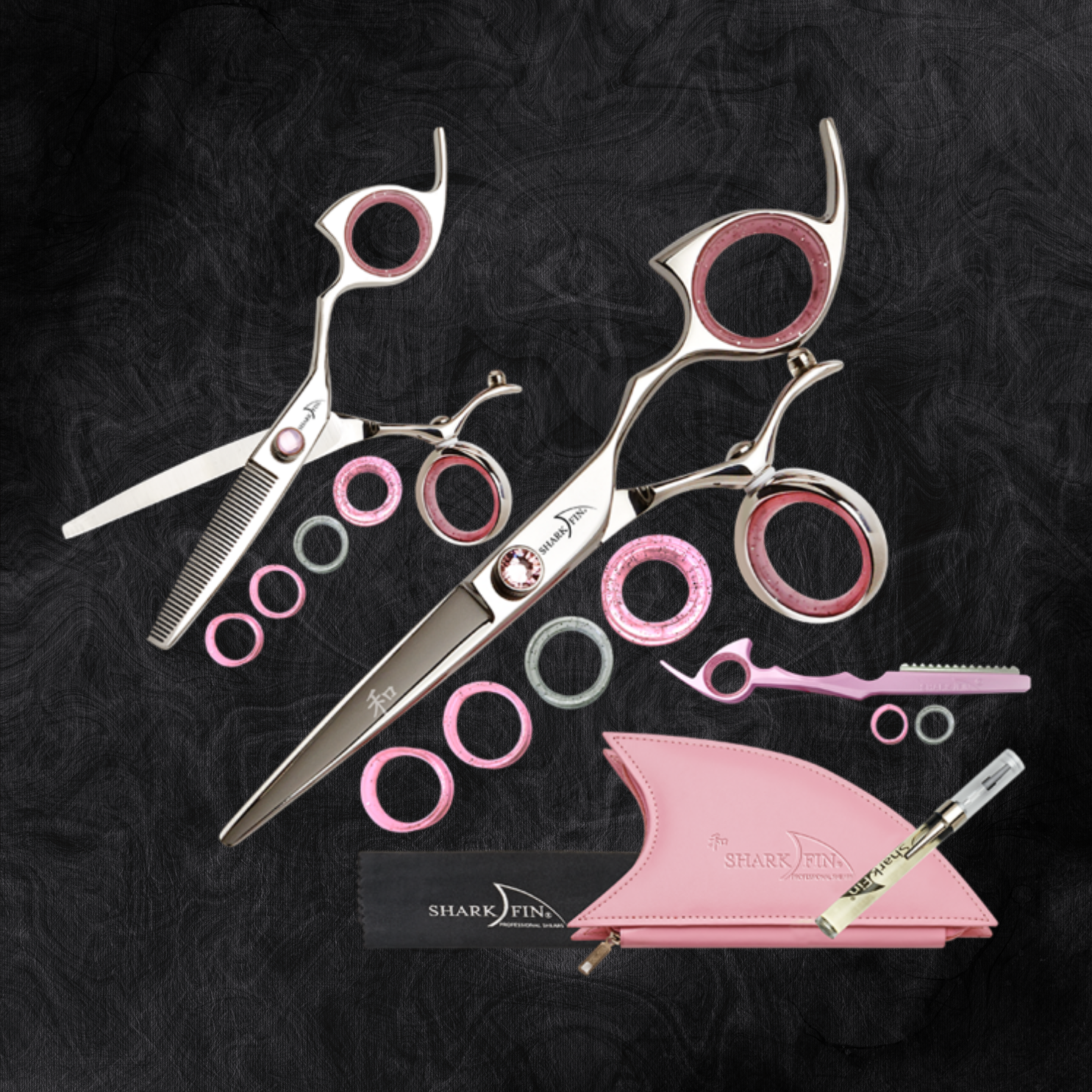
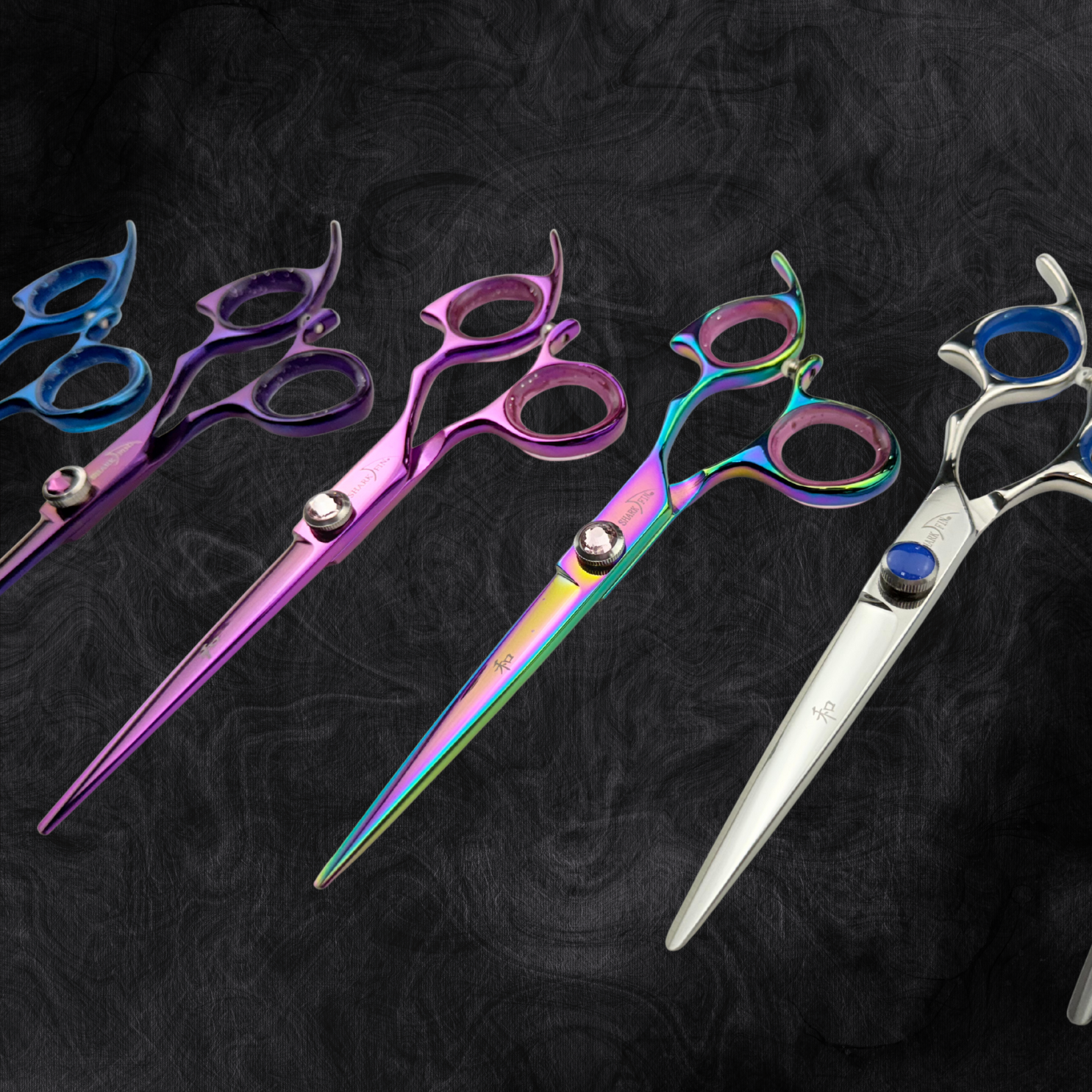
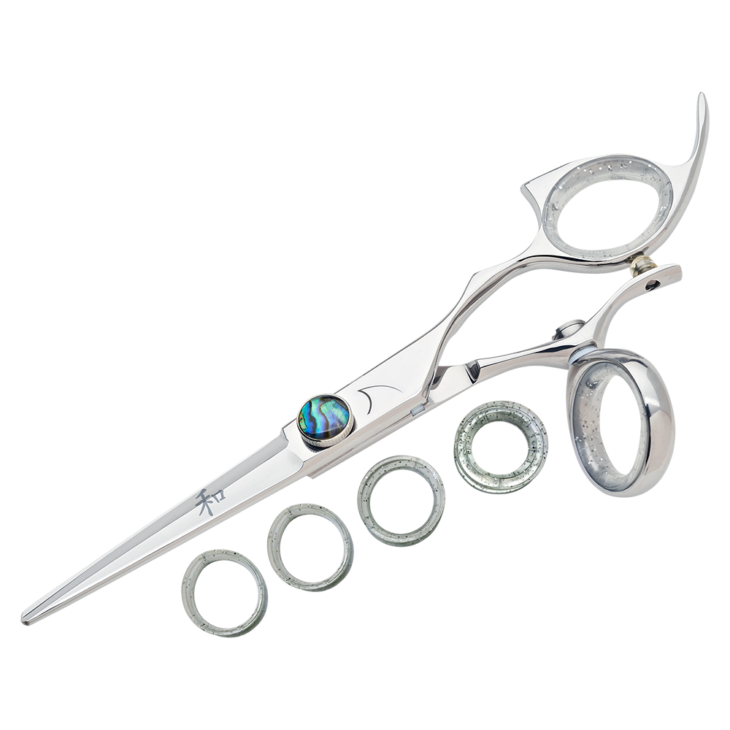
Many stylists find that a crane handle gives them incredible freedom of movement, especially for advanced techniques. Some, like our patented Shark Fin shears, even feature a swiveling thumb for ultimate flexibility. If you spend your days doing intricate slide cutting or detailed work, the fluid motion a crane handle provides is a game-changer. You can see how different grips work by watching demonstrations on our YouTube channel.
Straight Handles
Straight handles, also known as opposing handles, have finger and thumb holes that are symmetrical and aligned directly across from each other. This is a classic, old-school design that you might have learned on. While some veteran stylists are accustomed to them, they are generally the least ergonomic option available.
Using a straight handle forces you to raise your elbow and puts your thumb in an unnatural, forward position, which can create significant tension in your hand and wrist over time. While they might work for certain niche techniques or for stylists who only cut occasionally, most professionals find that moving to an offset or crane handle is one of the best things they can do to prevent long-term injury and extend their career.
Why Ergonomics Can Make or Break Your Career
Let’s be real: ergonomics is more than just a buzzword you see on product packaging. For a hair stylist, it’s the key to a long, healthy, and prosperous career. Think about the thousands of cuts you make every single day. Those repetitive motions, awkward angles, and constant pressure on your hands, wrists, and shoulders add up over time. Without the right tools and techniques, you’re putting yourself at risk for repetitive strain injuries (RSIs) like carpal tunnel syndrome, which can cause pain, numbness, and weakness, potentially forcing you to cut back on clients or even leave the profession you love.
Choosing ergonomic shears isn’t a luxury; it’s a fundamental part of your professional toolkit. It’s an investment in your most important asset: you. The right pair of shears will feel like a natural extension of your hand, allowing you to work more efficiently and with less physical stress. This means you can focus on your craft, deliver amazing results for your clients, and protect your body so you can continue working behind the chair for years to come. We’ll look at how specific features like weight, balance, and tension all play a crucial role in creating a tool that works with you, not against you.
Finding the Right Weight and Balance
The perfect shear should feel like it was made for your hand, and that starts with weight and balance. A poorly balanced shear will force the muscles in your hand and wrist to work overtime just to hold it steady, leading to fatigue and strain before you even finish your second client of the day. When you pick up a well-balanced shear, the weight should rest comfortably in your palm, not on the blades or in the finger rings. This allows for maximum control with minimal effort. While many stylists prefer ergonomic offset handles for their comfortable, natural feel, the most important thing is finding a design that supports your hand. Shark Fin’s patented shears are a great example of how innovative design can provide superior comfort and control.
Understanding Tension Systems
Have you ever had a day where your shears just felt… off? They might be folding hair or not cutting as cleanly as they used to. Many stylists assume the blades are dull, but the real culprit is often incorrect tension. The tension system is the screw or dial that holds your blades together, and it controls how smoothly they open and close. If the tension is too loose, the blades can separate and fold the hair instead of cutting it. If it’s too tight, you’ll have to apply extra force with your thumb, which quickly leads to hand fatigue and can cause premature wear on the blades. Learning how to check and adjust your tension is a non-negotiable skill. A quick daily check can make a world of difference in your cutting performance and hand comfort.
Avoiding Long-Term Strain and Injury
Every choice you make about your tools directly impacts your physical health. Using non-ergonomic shears forces your body into unnatural positions, like raising your elbow, bending your wrist at an extreme angle, and over-extending your thumb. Over a full day of appointments, this creates micro-trauma in your joints and tendons. An ergonomic design, especially one with a swivel thumb, helps keep your wrist straight, your elbow down, and your hand in a relaxed, neutral position. This comfortable design is your best defense against the hand and wrist problems that can arise from repeated use. By prioritizing tools that protect your body, you’re not just buying a pair of scissors; you’re investing in your future and ensuring you can keep creating beautiful hair without sacrificing your well-being. You can see how different grips affect your posture on the Shark Fin Shears YouTube channel.
Match Your Shears to Your Cutting Style
Just as a painter uses different brushes for broad strokes and fine details, a stylist needs a variety of shears to execute different techniques flawlessly. Having the right tool for the job isn’t about showing off a large collection; it’s about working with greater precision and efficiency. Using a long, heavy shear for delicate point cutting can feel clumsy and hide your work, while trying to remove bulk with a tiny detail shear will exhaust your hand and take forever.
Choosing a shear that matches your technique makes your job easier and delivers a better result for your client. More importantly, it protects your body from unnecessary strain. When your tool does the work for you, you put less stress on your fingers, wrist, and shoulder, which is fundamental for a long and healthy career behind the chair. As you grow, you’ll find that building a small, specialized toolkit allows you to master a wide range of cutting tutorials and styles with confidence.
For Precision and Detail Work
When you’re creating sharp lines, detailing a fringe, or cleaning up a neckline, you need absolute control. This is where shorter, fine-tipped shears shine. For this kind of work, the sharpness of your blades is everything. A great way to test a potential shear is to cut a small section of hair; the strands shouldn’t push or “run away” from the blades, and the cut should feel crisp and effortless. A dull or poorly made shear will bend the hair instead of cutting it, ruining your clean line. A shorter blade gives you the control to make micro-adjustments, ensuring every snip is intentional and exact.
For Blending and Texturizing
Texturizing and thinning shears are your go-to tools for softening harsh lines, removing weight, and creating seamless blends. One of the most common mistakes stylists make here is using a dull texturizing shear. Instead of cleanly removing a percentage of the hair, a dull blade will snag and pull, leading to an uneven, choppy result and a lack of control. A sharp, high-quality texturizer glides through the hair, giving you the ability to properly texturize hair and create that soft, lived-in look your clients love. Remember that the number of teeth on your shear will also determine how much hair is removed, so choose one that fits your blending style.
For Bulk Removal
When you need to remove a significant amount of length or work through thick, dense hair, you need a workhorse. Longer shears (typically 6 inches or more) are designed for power and efficiency. Many stylists report issues with shears that tug or push hair when trying to cut through large sections, which is often a sign of a poor-quality or dull blade. A sharp, powerful shear will slice cleanly through the hair without resistance. This is especially important for techniques like scissor-over-comb, where you need to move quickly and confidently to create a uniform shape.
Are Professional-Grade Shears Worth the Investment?
Let's be real: the price tag on a pair of high-end shears can make you pause. It’s a serious purchase, and it’s completely fair to ask if it’s truly worth it. The short answer is a resounding yes. Think of professional shears not as an expense, but as one of the most important investments you'll make in your career, your health, and your craft. The right pair of shears does more than just cut hair; it becomes an extension of your hand, allowing you to execute techniques with precision and confidence.
Better tools lead to better results, happier clients, and less strain on your body over a long day. When you invest in quality, you're investing in longevity, both for your tools and your career. It’s about choosing equipment that supports you day in and day out, protecting your most valuable assets: your hands and your talent. You can see the difference in action by watching how seasoned stylists use their tools to create flawless looks. Exploring different cutting techniques can show you just how much a quality shear can improve your work. Let's break down what that investment really gets you in terms of build quality and long-term support.
The Difference in Build Quality and Craftsmanship
The gap between cheap scissors and professional shears is massive, and it starts with the materials. High-quality shears are crafted from superior steel, like Japanese stainless steel, which is renowned for its hardness and ability to hold an incredibly sharp edge. This means your cuts are cleaner, crisper, and require less force, which prevents you from damaging the client's hair and tiring out your hand. A well-made pair of professional shears can last for a decade or more with proper care, while a cheaper pair might need replacing after just a year. That durability and consistent performance are what you’re paying for.
What to Look for in a Warranty and Service
A company that believes in its product will stand behind it. When you're investing in professional shears, a solid warranty isn't just a bonus; it's a necessity. It’s your assurance that the manufacturer is confident in their craftsmanship and materials. Look for a company that offers a lifetime warranty against factory defects, as this shows a true commitment to quality. Beyond the initial purchase, consider the available service options. Professional sharpening is crucial for maintaining your shears' performance, and a company that provides this service understands the long-term needs of a stylist. This kind of support protects your investment and gives you peace of mind.
Common Mistakes to Avoid When Choosing Shears
Investing in a new pair of shears is a big deal. It’s a decision that directly impacts your daily comfort, the quality of your work, and the longevity of your career. With so many options out there, it’s easy to get overwhelmed and make a choice you’ll regret. We’ve all been there, maybe buying a pair that looked great online but felt awful in hand, or trying to save a few bucks only to end up with shears that fold hair.
To help you make a smart investment, let’s walk through some of the most common mistakes stylists make when choosing shears. By understanding these pitfalls, you can approach your next purchase with confidence, knowing exactly what to look for and what to avoid. Thinking about tension, prioritizing quality over a low price tag, and taking the time to test your shears will ensure you find a tool that feels like an extension of your own hand and supports your artistry for years to come.
Ignoring Tension Settings
Have you ever felt like your shears were getting dull, even when they were relatively new? The real problem might not be the blade, but the tension. The tension setting is what holds the two blades together with the perfect amount of pressure. If the tension is too loose, the shears can fold or push the hair instead of cutting it cleanly. If it’s too tight, you’ll cause premature wear on the blades and put unnecessary strain on your hand and wrist with every snip. When you’re looking at new shears, pay attention to the tension system. Is it a simple dial you can adjust by hand, or will you need a special tool? A good pair of shears will have a reliable tension system that’s easy to fine-tune, which is a key part of your daily shear maintenance.
Choosing Price Over Quality
We all love a good deal, but when it comes to your primary tool, opting for the cheapest pair is a mistake that can cost you more in the long run. Low-quality shears are often made from inferior metals that can’t hold a sharp edge, leading to blades that dull quickly. As a result, you might find them tugging on your client’s hair or failing to create the crisp, clean lines your work depends on. Think of your shears as an investment in your craft and your business. A well-made pair from a reputable company will not only deliver superior performance but will also last for many years with proper care. This commitment to quality craftsmanship ensures your tools support your skills instead of holding them back.
Forgetting to Test Them Out
You wouldn’t buy a car without a test drive, and the same principle applies to your shears. The only way to know if a pair is right for you is to feel it in your hand and see how it cuts. When you hold them, check the weight and balance. Do they feel comfortable, or do they strain your hand? The most important test, of course, is the cut itself. If you can, try them on a mannequin or a hair weft. The cut should feel smooth and effortless, with the hair falling away cleanly. The blades shouldn't catch or "run away" from the hair section. If you’re buying online, look for a company with a good return policy or a trial period so you have the chance to make sure they’re the perfect fit before you fully commit.
How to Care for Your Shears
Investing in a pair of high-quality shears is the first step, but how you care for them determines their lifespan and performance. Think of your shears as the most important instrument in your kit, because they are. With just a few simple daily and weekly habits, you can protect your investment, ensure consistently clean cuts for your clients, and prevent the kind of hand strain that can shorten a career. Proper maintenance isn't complicated, but it is absolutely essential. It’s the difference between a tool that lasts for years and one that needs replacing far too soon. Neglecting your shears can lead to dull blades that damage hair, poor tension that causes hand fatigue, and even rust that ruins the steel. Taking care of them is just as important as mastering your cutting technique. From daily wipe-downs to professional sharpening, each step plays a vital role in keeping your shears in peak condition. For more visual guides on shear care, you can always find helpful tutorials on our YouTube channel. Let’s walk through the essential routines that will keep your shears feeling like new, cut after cut.
Your Daily Cleaning Routine
This is the simplest yet most crucial habit you can build. After every single haircut, take a moment to wipe your blades clean with a soft, dry cloth. Hair fragments, styling products, and moisture create buildup that can quickly dull your blades and even lead to corrosion over time. Just a few seconds is all it takes. Use a microfiber cloth or a small piece of leather and wipe from the pivot point down to the tips of the blades. This removes any debris and ensures your shears are ready for the next client. Make it a non-negotiable part of your station cleanup, and you’ll be amazed at how much longer your blades stay sharp and effective.
Oiling and Adjusting Tension
Many stylists think their shears are dull when the real problem is incorrect tension. If the tension is too loose, the blades will fold or push hair. If it’s too tight, they will grind against each other, causing premature wear and straining your hand. You should also oil your shears daily. Simply open the blades to a 90-degree angle, put one drop of high-quality shear oil on the pivot point, and gently open and close them a few times to work the oil in. This flushes out tiny hair fragments and debris while keeping the cutting action silky smooth. Learning how to adjust the tension on your specific shears is a game-changer for both performance and longevity.
Knowing When and How to Sharpen
Working with dull blades is one of the biggest mistakes a stylist can make. It not only makes your job harder but also damages your client's hair by creating split ends and an uneven finish. You’ll know it’s time for a sharpening when your shears start to push, pull, or fold hair instead of cutting it cleanly. You might also feel a "crunchy" sensation as you cut. When these signs appear, resist the urge to use a DIY sharpening tool. Professional shears require a specialist. Find a reputable sharpener who has experience with high-end, convex-edge blades. A proper sharpening will restore your shears to factory-fresh condition, while a bad one can ruin them permanently.
Storing Your Shears Properly
Your shears should have a safe home when they aren’t in your hands. Tossing them onto your station, leaving them in a cluttered drawer, or dropping them into a wet sanitizer jar can lead to nicks, scratches, and misalignment. A single drop onto a hard floor can be enough to permanently damage the blades or their alignment. The best practice is to store your shears in the protective case they came in or in a dedicated leather pouch. This keeps them clean, dry, and safe from accidental bumps and drops. Always make sure your shears are closed when you put them away to protect the fine points of the blades.
The Right Shears for Every Stage of Your Career
The shears that got you through beauty school might not be the ones you reach for ten years into your career. As you grow and refine your skills, your tool requirements will change, too. Your ideal shears should match your current skill level, cutting style, and client volume. Whether you're just starting out or you're a seasoned pro with a fully booked schedule, knowing what to prioritize will help you find the perfect fit for your hands and your craft.
For New Stylists
When you're new to the floor, your focus is on building a solid foundation of skills. The last thing you need is a pair of shears that works against you. A common issue for new stylists is using shears that tug or push hair instead of cutting it cleanly, which can really shake your confidence. Start with a versatile, high-quality straight shear that feels comfortable in your hand. Pay close attention to the tension; many stylists think their shears are dull when the real problem is a lack of proper adjustment. Before you buy, it's a great idea to test the shears on a mannequin to make sure the cut feels smooth and the hair doesn't slide away from the blades.
For Seasoned Stylists and Specialists
Once you have years of experience, you know exactly what you need from your tools. You might be developing a specialty in precision bobs or creative texturizing, which calls for specialized shears. At this stage, ergonomics and durability are everything. You need shears that can keep up with your back-to-back appointments without causing hand fatigue or long-term strain. Investing in high-carbon steel and patented handle designs becomes less of a luxury and more of a necessity for career longevity. You also understand that proper shear care is non-negotiable for protecting your investment and ensuring every cut is flawless.
Frequently Asked Questions
I’m just starting out and can only afford one great pair of shears. What’s the most versatile option? If you’re building your first professional kit, your best bet is a high-quality straight shear around 5.5 inches long. This size is a fantastic workhorse; it’s long enough for efficient line work and scissor-over-comb but still gives you enough control for detailing. I’d also strongly suggest choosing one with an offset handle. It’s a huge ergonomic step up from the straight handles on most student shears and will help you build healthy habits from day one.
My hand and wrist hurt after a long day. Will switching to ergonomic shears really make a difference? Yes, it will make a world of difference. That pain you feel is a warning sign from your body. Traditional shears can force your hand, wrist, and elbow into unnatural angles, and repeating those motions thousands of times a day causes strain that can lead to serious injury. Ergonomic shears, especially those with crane handles or swivel thumbs, are designed to keep your body in a neutral, relaxed position. This reduces muscle tension, prevents fatigue, and is one of the most important investments you can make for a long and healthy career.
How can I tell if my shears need sharpening or if the tension is just off? This is a great question, and it’s a check you should do often. Before assuming your blades are dull, test the tension. Hold one handle firmly and lift the other blade so it’s perpendicular, then let it go. It should close smoothly about two-thirds of the way. If it drops shut completely, it’s too loose. If it barely moves, it’s too tight. If you adjust the tension and find your shears are still pushing or folding hair, that’s your signal that it’s time to see a professional sharpener.
What’s the real difference between the final look I get from a thinning shear versus a texturizing shear? Think of it as creating a soft blend versus creating visible separation. A thinning shear has many teeth set close together, so it removes a small amount of hair very subtly. It’s perfect for softening harsh lines or reducing bulk without anyone knowing your secret. A texturizing shear has fewer, wider teeth, so it removes larger pieces of hair. This creates noticeable texture, movement, and a piecey, modern finish.
When it comes to the blade, what is the single most important thing I should look for? The most important factor is the quality of the steel. Everything else, from sharpness to durability, starts there. Look for shears made from a high-carbon Japanese steel, like 440-C. This type of steel is incredibly hard, which allows it to be sharpened to a razor-fine edge and, more importantly, to hold that edge for a long time. It means you get cleaner cuts with less effort and a tool that will be your partner for years, not months.